
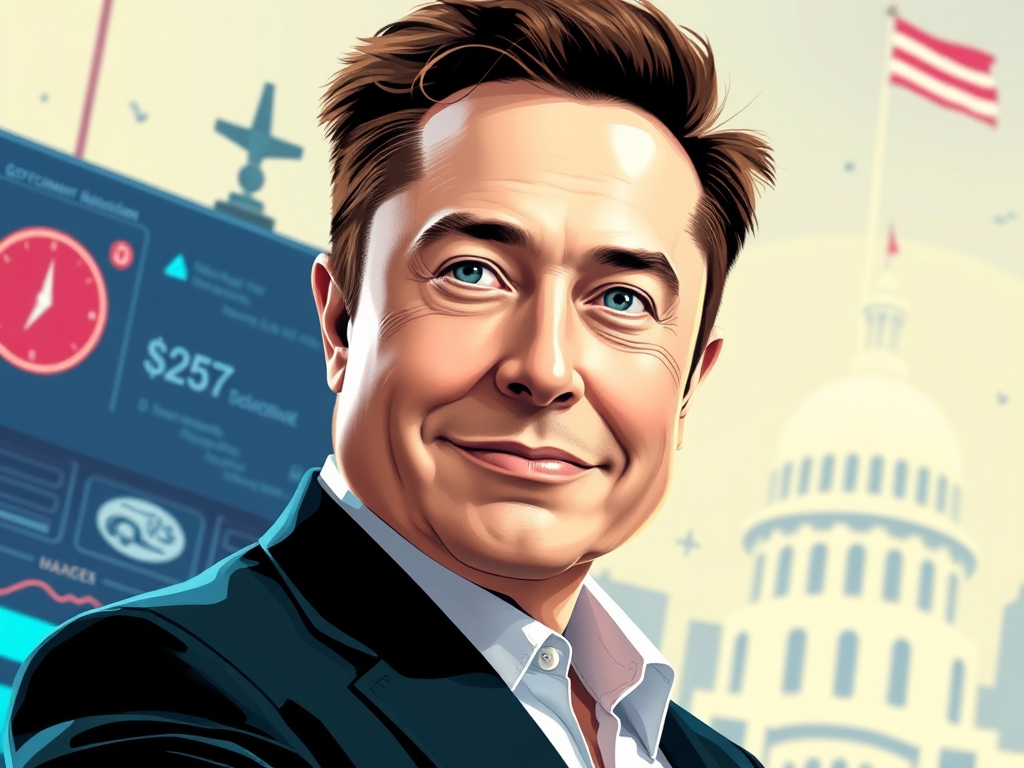
“DOGE” was once a moniker for a meme crypto coin; now, it’s the acronym of the most pervasive and speculative departments, the Department of Government Efficiency. It is undeniable that the U.S. government could be more transparent and productive with their funds: the federal government reported $230 billion dollars in “improper payments” for the 2023 fiscal year. However, the legality of a lot of what DOGE and Elon Musk are doing is conjectural at best.
The legitimacy of DOGE itself is embroiled in controversy. In order to establish a new department in the federal government, a law needs to be passed by Congress detailing the exact powers and responsibilities of said new department. This, in effect, prevents presidents from unilaterally spawning new departments when it’s convenient for their personal agenda. However, President Trump ignored this check on his power when he established DOGE without congressional approval and oversight. With seemingly no accountability, DOGE finds itself in an unusual position where it is conducting its business – reallocating funds of different departments – without being adorned with the legal authority to do so.
Another point of contention comes in the form of business mogul Elon Musk, a senior advisor to the President and head of DOGE. It is incontrovertible that Musk holds significant influence over the President’s agenda, and in his position as department head of DOGE, has been bestowed the power to enforce his brutal widespread firings on all facets of government like he did at X. However, the federal government doesn’t operate like a business; it has idiosyncrasies that private corporations are not bound by. With Musk’s lack of experience in government, his attempts to streamline government operations has been nothing short of a partisan mirage. DOGE has been responsible for firing hundreds of civil servants with little to no explanation, completely disrupting the operations of key agencies. So, though DOGE was intended to increase efficiency, it ironically had an adverse effect.
Musk’s hold over DOGE is not only irrational due to his lack of experience in the public sector, but his personal conflicts and lack of care over DOGE dealings have exacerbated his erratic leadership. Musk has a vested interest in Tesla and SpaceX, two companies that rely heavily on government sanctioned contracts. Musk’s role as head of DOGE and senior advisor to President Trump allows him to directly benefit his companies while detracting from his competitors. Moreover, Musk doesn’t take his government responsibilities seriously. Reports have indicated that Muck has only attended a fraction of DOGE’s meetings and DOGE’s reported cuts that they have championed on their website have been riddled with inaccuracies. Thus, while the impetus behind creating DOGE could’ve been well-intentioned, from the moment of its founding DOGE has been a nightmare for government employees and departments alike. The most injurious ramification of the prevalence of DOGE, however, strikes at the very core of American governance: democracy.
DOGE’s existence threatens the democratic framework that our predecessors have tediously molded over the years, and could betoken the dangerous path the Trump administration is headed down. Disregarding the norm of congressional approval and installing an unelected tech billionaire to one of the most influential positions in government is antithetical to the goals proffered by democracy. Day by day, it appears that we are straying further and farther away from our founding ideas of life and liberty, and closer to aristocratic hegemony. If DOGE is allowed to continue to flourish and micromanage all aspects of government, is the Trump administration now allowed to flout any Constitutional check that comes in his way. This begs the question: where do we draw the line? Whatever the answer is, it’s imperative that democratic principles are held as paramount again, before the line vanishes altogether. But hey, it’s just a thought!
 Ode To Thought