
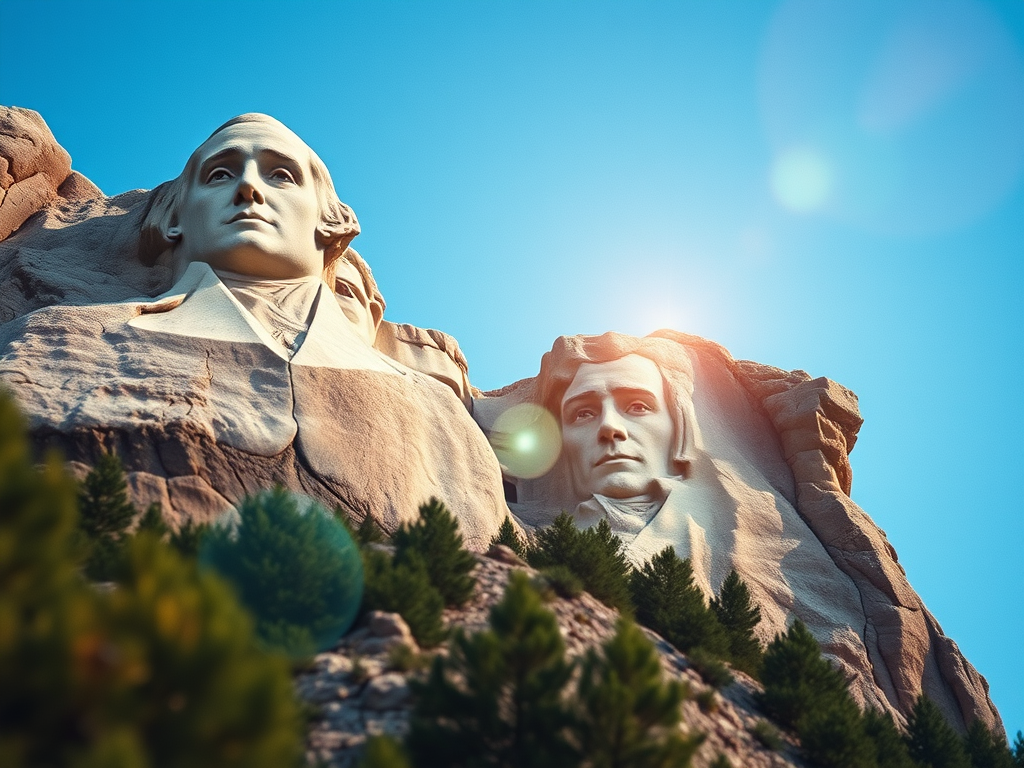
Our forefathers fought valiantly out of one principle: no taxation without representation. Tyranny would not be welcomed in the land soon to become the United States of America. In stark opposition to the royal monarchs that wielded much of the world’s global powers in the late 18th century, our forefathers crafted a nation built upon liberty, individual rights, and a government that serves and derives its power from the people. They envisioned a land rich with economic growth with the promise of freedom and opportunity for people from every background. However, the America of today strays far from the forefather’s idealized hopes for good and for bad.
Our forefathers were far from perfect; although their rhetoric suggested that they yearned for America to be a place of equal opportunity, their racial prejudices and flawed personal beliefs led them to take actions that were contrary to their pronounced desires. Women, African Americans, Native Americans, and other minorities endured discrimination and faced severely limited rights. Compared to the fraught early days of the United States, we have come a long way in terms of racial equality. Gone are the days of outward, ubiquitous bigotry. Nevertheless, though the United States of America has risen to become a global superpower, its ill-treatment of migrants make it apparent that the nation is far from the future our forefathers penned in our founding documents.
I am a proud child of two immigrant parents who had to undergo the United States’s stringent immigration process in hopes of finding opportunity, not only for their professional careers, but for my education. With uncertainty ahead of them, my parents traveled to this great nation with a suitcase and two H-1B Visas in hand. They were able to apply for green cards and later became US citizens in a process that took approximately ten years. If you were to tell any hopeful immigrant nowadays that the naturalization process would last a measly ten years, they would call you ridiculous. Cases like my parents have become increasingly rarer as higher and higher barriers are continuously being placed on migration.
Our forefathers emphasized that the United States should be a sanctuary in which people from all walks of life can immigrate for economic prosperity and liberty. George Washington, our revered commander who led this country to freedom, recognized and furthered the sentiment that America is a nation that should be open to and is made up of immigrants. In a letter to an Irish official, Washington wrote: “The bosom of America is open to receive not only the opulent and respected Stranger, but the oppressed and persecuted of all Nations and Religions” Washington and our other founding fathers not only contended that immigrants should be welcomed out of principle, but also recognized the value that immigrants can bring to our budding nation. This perspective is demonstrated by James Madison when he argued, “America was indebted to immigration for her settlement and prosperity. That part of America which had encouraged them most had advanced most rapidly in population, agriculture and the arts.” As articulated by our founding fathers, immigrants were always meant to have a place within American society. Without the labor and innovation brought by immigrants, America wouldn’t be where it is today. While immigrants have never turned their backs on America, modern America is turning its back on immigrants. Thus, while the United States of America is significantly more diverse compared to the America that our forefathers inhabited, there is still a long way to go to realize their dream of equal opportunity for all.
Today’s America exists at the crossroads of our forefather’s ideals and contemporary challenges. While we as a country have made significant strides in pursuit of equality and representation, there is still so much left to be desired, made poignant by the disparities in wealth, inequities in opportunities, and oppressive institutions. What makes it particularly disheartening is that most of this country’s shortcomings are self-inflicted. With higher civic participation and leaders committed to genuine reform, we can help make life, liberty, and the pursuit of happiness a feasible reality for all walks of life. So, no, the America of today is not what our forefathers would have hoped for. However, there is light at the end of the tunnel, and I’m hopeful that America can become the haven that our forefathers envisioned and fearlessly fought to create. But hey, it’s just a thought!
 Ode To Thought