Don’t stop, make it drop, make it blow my speakers up! Up until 2016, when someone said “TikTok” you’d think of the Kesha Song. But today, the term is synonymous with the popular social media app. Tik Tok is famous for its innovative short form videos that have revolutionized the industry. Particularly popular among the younger generations, TikTok has provided an avenue for people to form inter-knitted communities and a means to self expression. The app has seen unparalleled success expecting to accrue upwards of 1.8 billion users. However, there is one obstacle that has threatened the app’s future: the US government.
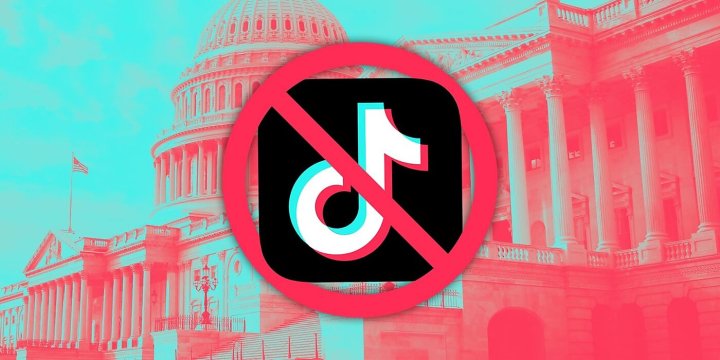
A bill called the Protecting Americans from Foreign Adversary Controlled Applications Act, H.R 7521, was focused on banning apps that threaten American national security. This bill was overwhelmingly passed in the House but was not put up for a vote in the Senate. A month later, the provisions outlined in this act were paired along with a foreign aid package for American allies (Ukraine, Taiwan, Israel) and this bill passed by both chambers and was signed by President Biden on April 24, 2024.
Tik Tok is being banned primarily due to national security risks. The parent company of TikTok, ByteDance, has its base of operations in Beijing and is thus under Chinese jurisdiction. The Chinese government has shown time and time again the willingness to exploit privately owned businesses in order to gain data. For example, during the Covid pandemic, the Chinese government accessed the consumer information of Chinese tech giants like Alibaba in order to track the spread of the virus. Although it was for a noble cause, it demonstrates the capabilities of the Chinese government. Moreover, laws like the National Intelligence Law incentivize companies to comply in handing over confidential information to the government.
This ban is not an immediate ban per say. If ByteDance sells TikTok to a non-Chinese owned business within the next 9-12 months, the app won’t be banned from the US. If not, it will not be permitted on US soil. Whether banning TikTok is appropriate is a question in itself. On the one hand, this banning interferes with the free market and contradicts the free speech principle that the United States holds so dearly. Moreover, there is no concrete proof that ByteDance has farmed the data of its users beyond the standard industry practices.
However, the potential risks of not banning TikTok far outweigh these grievances. Taking into account the geopolitical landscape, TikTok could become a powerful tool for the Chinese government to take advantage of US citizens. With its exceedingly large user base, its influence is unparalleled. The Chinese government could use the app to spread misinformation or propaganda. They could even collect the data of those using the app. This is an evident and immediate risk for the United States and a ban on TikTok addresses it sufficiently. Afterall, there is a reason why this piece of legislation was bipartisan. There are not many things the two political parties agree on, but banning TikTok is definitely one of them. But hey, it’s just a thought!
 Ode To Thought